Deciding to leave a job you’ve held for years brings a turbulent mixture of emotions. Excitement to pursue long-held dreams collides with paralyzing anxiety over the unknown. Will voluntarily stepping away from stable paychecks to reinvent yourself professionally prove foolish… or courageous?
As daunting as pivoting to a new industry or role feels in the moment, recall that unease simply signals growth beyond current capabilities. Let the discomfort stretch your confidence and capacity. Embrace this transitional uncertainty as a portal into new wisdom that can only emerge by daring to Question the status quo and rewrite life’s script to align ambitions with evolving passions.
Reasons to Make a Career Change
There comes a time in many people’s careers when they start to feel unfulfilled, bored, or simply ready for a new challenge. Making a major career shift is not easy, but it can reinvigorate your passion for work and open up new possibilities. Here are some common reasons why people decide to make a career change:
You’ve Lost Passion for Your Current Field
Over time, even work you once enjoyed can start to feel stale and routine. When every day feels the same, you may find your motivation and performance suffering. As inspirational author Steve Maraboli said, “The joy of life comes from our encounters with new experiences, and hence there is no greater joy than to have an endlessly changing horizon.” If you no longer feel energized or excited by your job, it could be a sign that your interests and values have shifted and it’s time to consider other fulfilling career options.
You Want Greater Work-Life Balance
The demands of certain high-powered careers can easily lead to burnout and work-life imbalance over time. As your priorities and responsibilities outside of work evolve, you may decide your current job’s round-the-clock availability expectations or frequent travel commitments are no longer tenable for your life. Making a planned career shift to a more flexible or remote-friendly role in a different field can allow you to take better care of your health and relationships.
You Need More Income
In many occupations, salaries top out after a certain point and annual raises barely keep pace with inflation. If you find yourself struggling financially despite putting in long hours and taking on additional responsibilities, it likely means there is limited earnings potential in your current career path. Considering retraining for a more lucrative field like technology, healthcare, or finance can be a strategic move to improve your long-term financial security. As career coach Marty Nemko notes, “You need enough money to live the life that most deeply satisfies you.”
You Crave New Challenges
Doing mostly the same tasks year after year can cause some workers to feel unstimulated in their careers. Perhaps you have mastered your job responsibilities with relative ease and don’t feel adequately tested. Or maybe you ache for new skills and knowledge you cannot gain in your current role. Shifting into a more challenging, fast-paced industry that aligns with your natural talents allows you to continue growing rather than stagnate. Mastering fresh difficulties also builds resilience and self-confidence to propel the rest of your life.
You Want Your Work to Align with Personal Values
Over time, people often develop an increasing sense of purpose and shifting priorities. Causes and social issues you care passionately about can inspire you to seek out more meaningful work. Making a career change to align what you do day-to-day with your personal values provides a sense of fulfillment beyond just collecting a paycheck. For example, an accountant might pursue certification in sustainable business practices to combat climate change through their job. Or a corporate manager might transition to leading volunteer initiatives for a charity they deeply support.
As entrepreneur Steve Jobs once remarked, “Your work is going to fill a large part of your life, and the only way to be truly satisfied is to do what you believe is great work. And the only way to do great work is to love what you do.” If your current job no longer fits your concept of greatness, listen to your instincts – it could be time to take the leap into more purposeful work. With thoughtful planning and courage, a career change can open up a world of possibilities.
Overcoming Fears and Self-Doubt
Deciding to make a major career shift can be incredibly daunting. Even when you feel confident you have outgrown your current job, the idea of venturing into the unknown is scary. Self-doubt and anxiety are completely normal emotions you will likely grapple with when contemplating such a monumental life transition.
Getting Comfortable with Discomfort
As inspirational author Robin Sharma noted, “Change always comes bearing gifts, but we have to be willing to receive them. Most people just continue sleepwalking through their comfortable routines. The price however is that they get stuck in a dull existence.” Pushing past fears by embracing discomfort is necessary for growth.
Rather than resisting feelings of uncertainty, consciously acknowledge they are part of the process. Anxiety about whether you can adapt to different workplace dynamics or master new skills means you are moving beyond your comfort zone – exactly where career progression happens. As entrepreneur Richard Branson remarked, “If your dreams don’t scare you, they aren’t big enough.” Have faith that with hard work and dedication, handling new job responsibilities will become progressively easier over time.
Quieting Your Inner Critic
That persistent inner voice loudly questioning if you are truly capable of succeeding in a new industry can seriously undermine confidence. When imposter syndrome creeps in, reframe self-doubt as a sign you are boldly developing as a professional rather than spiraling. The next chapter of your career is unwritten – and that blank page is yours to fill with audacious goals and accomplishments.
Also consciously curtail negative self-talk when it arises. Make an effort to notice criticizing inner commentary without judgment then actively replace it with encouraging affirmations. Evidence shows that intentionally using positive self-statements activates motivation regions of the brain, improves moods, and enhances performance.
Seeking Inspiration from Others
Connect with role models who have successfully changed fields later in their careers. Seeing firsthand how others have happily adapted despite initial reservations can dissolve stubborn anxieties. In a 2022 German study on mid-career transitions, 82% of participants who interacted with mentors who had shifted roles reported feeling more hopeful, determined and less apprehensive about making a similar move.
Try informational interviews to hear relatable stories. Ask contacts working in your desired new field to describe their career paths, biggest concerns while transitioning, and what ultimately gave them certainty. Knowing others have conquered similar doubts by trusting their choices will inspire you to silence limiting beliefs.
Embracing Career Fluidity as the New Normal
Gone are the days when dedicated employees stayed with a single company in one static role for decades. As 2022 Bureau of Labor Statistics data shows, today’s average employee tenure is just 4.1 years. Frequent job changes are commonplace rather than unusual missteps.
See your career as an ever-evolving journey without rigid rules or set timelines dictating next steps. Be flexible and view periods of uncertainty during transitions as exciting catalysts for reinvention rather than threats. Have confidence that transferring your skills into unfamiliar territory will ultimately help you thrive. The perfect opportunities to challenge yourself and actualize your boldest professional dreams await!
The Value-First Practitioner (Free Guide)
Discover how 10,000+ practitioners grow their practices through client transformation, not marketing.
Preparing Financially for a Career Transition
Making a major career change can be stressful enough without adding financial worries to the mix. Proper planning and budgeting ensures you can cover living expenses if there is a gap between jobs. It also means having a cushion for unexpected costs as you establish yourself in a new field. Follow these key tips for financially preparing to transition careers:
Audit Your Current Financial Situation
The first step is gaining clarity on your overall budget status. Review the last 3-6 months of bank/credit card statements to tally recurring costs for necessities like housing, transportation, food, utilities, debt payments, etc. Also factor in discretionary expenses and savings contributions. Evaluating spending patterns helps determine where cuts may be possible to free up funds if income drops temporarily during a career shift.
Build Up Emergency Savings
Having an emergency cash reserve is wise before any major life transition. Financial experts typically recommend saving enough to cover 3-6 months of essential living expenses as a cushion for unexpected costs. This means food, shelter, medications, transportation and debt payments. Beef up automatic transfers into high-yield savings over time so the funds accumulate steadily while still employed. Once you commit to resigning, avoid tapping these savings until absolutely necessary.
Pay Off High-Interest Debt
Entering a career change with minimal debt, especially high-interest credit card balances, improves financial resilience. Make repaying those aggressively before leaving your current job an urgent priority. Explore zero-percent balance transfer cards as an option to eliminate interest costs for a period. Chipping away at student loans also helps but is a lower concern than credit card debt in the short term. Having one less monthly payment as income fluctuates provides needed breathing room.
Research Cost of Upgrading Skills
Will additional education, certifications or training be essential to make the desired career pivot? Research options and anticipated costs now so they can be built into planning. Some companies offer tuition reimbursement to offset qualifications gained while still an employee. Explore scholarships, grants, military funding for veterans, or education tax incentives. Create a timeline of how best to mix work with affordable skills upgrade options over the transition.
Craft New Resume First
Having an updated resume tailored for intended target roles prepared in advance eliminates mad scrambles once notice is given. It also allows discreetly asking trusted colleagues or career coaches to provide feedback so the strongest positioning possible is conveyed right out of the gate. Nothing relaxes financial worries over a career transition like quick callbacks and interviews due to a strategically branded resume.
Line Up Freelance Side Gigs
Exploring freelance contract opportunities related to your future aspirations cushions erratic early cash flow in a new field. Building a client roster with small projects in niche areas you enjoy can even blossom into full self-employment. And if salaried job hunting drags on longer than expected, this income stream helps avoid prematurely tapping emergency funds. Many career switchers retain profitable contract clients despite returning to traditional employment.
Negotiate a Graduated Resignation
If the thought of no steady paycheck is intimidating despite preparations, propose to leadership a transitional period before fully exiting. Offer to consult 10-20 hours monthly for a negotiated rate over 6-12 months to wrap up key initiatives while focusing energy toward building the new career. Framing resignation as an extended knowledge transfer opportunity can secure extra income insurance through the uncertainty.
With diligent budgeting, aggressive debt reduction, ample emergency reserves and creative side income, it is possible to leap confidently into a more fulfilling professional future. Trust that laying this financial foundation will provide stability underpinning bold career aspirations.
Tips for Updating Your Resume and Interview Skills
When preparing for a career change, updating your resume and interview skills are crucial steps. Tailoring these essential items to best showcase your fit and value for intended target roles in the new field smooths the application and hiring processes.
Revamp Resume Content and Format
More than just a refresh, your existing resume likely requires significant revamping to align with different industry norms and convey relevant background. As career coach Marty Nemko advises, “Replace hackneyed resume keywords with words commonly used in your new field’s job postings to help beat applicant screening software.”
Beyond verbiage shifts, examine standard resume structures common in the new industry and mimic layouts favored by hiring managers. Highlight transferable skills prominently while positioning unrelated past job duties further down. Focus on contributions and metrics vs mere tasks. As entrepreneur Steve Jobs counseled, “Your work is going to fill a large part of your life, and the only way to be truly satisfied is to do what you believe is great work. And the only way to do great work is to love what you do.” Reflect that passion for your new trajectory throughout.
Strategically Tailor Each Submission
Resist blasting out a generic resume identical for all applications. Carefully customize to align with terminology from each job posting’s responsibilities and requirements. As inspirational author Robin Sharma noted, “Change always comes bearing gifts, but we have to be willing to receive them.” Show willingness to receive the gift of career growth by matching background directly to the hiring manager’s stated needs.
Further personalize with a brief, authentic cover letter for each submission. Share specific reasons you are genuinely excited by aspects of that particular company’s culture/mission based on website reviews. Quickly summarize top two or three resume selling points in relation to their priorities. Proofread meticulously to prevent typos eroding crucial first impressions.
Seek Unbiased External Feedback
Before sending new materials to prospective employers, solicit input from professionals in your desired field and incorporate suggestions. Peers who have directly handled recent hiring provide invaluable insights on how your presentation can sharpen to turn heads. Also utilize career center counselors tied to local universities/community colleges to review if affordable options exist in your area.
Practice Interviewing Skills
Rusty interview abilities undermine otherwise impeccable applications, so refresh these skills in advance. Schedule several mock video interviews with trusted colleagues and ask for candid critiques about poise, professional demeanor and conciseness. Also leverage online resources like Big Interview which provide sample questions/answers and feedback from coaches.
When responding to interviewers, replace scattered “umm’s” and “ah’s” with thoughtful silence to gather ideas before answering. Prepare stories highlighting achievements tied to their priority requirements rather than just stating competencies. Send brief thanks emails reaffirming interest and fit to all who meet with you within 24 hours.
Address Career Change Rationale
Hiring managers weighing your candidacy undoubtedly have questions about the motive for pivoting fields, so address unprompted. Emphasize seeking continual growth and purpose-alignment in your work. As inspirational author Steve Maraboli counsels: “I have one life. I will not let my life be shaped by others, and I will not shape the lives of those whom I love…I realize I am in control of my life. I embrace change as an opportunity to grow.” Display that self-determination and zeal for lifelong learning driving your exciting career expansion.
With a meticulously formatted resume, personalized outreach, polished interview presence and passion for your new professional aspirations, landing that first pivotal opportunity in a transformed career path feels destined. Trust in hard work and perseverance to overcome obstacles as you actualize dreams.
Getting Support from Mentors and Career Coaches
Making a major career change can feel very daunting, especially if you don’t have much experience in your new field. Seeking guidance from mentors and career coaches is invaluable for building confidence, expanding your network, and navigating obstacles along the way.
Connecting with Industry Mentors
Identify professionals already thriving in your desired new career and respectfully ask to connect for informal advice or shadowing opportunities. As inspirational author Robin Sharma advises, “Surround yourself with people who remind you more of your greatness, not less.” Observe how potential mentors confidently handle day-to-day responsibilities you aim to take on. Ask questions about their own career progression and lessons learned through pivots.
While job shadowing, note effective strategies for overcoming common challenges that you can adopt as you transition roles. Discuss how mentors aligned operational duties with personal values and passions to help determine optimal work settings for your temperament.
According to a 2022 survey by American Society for Training and Development, 87% of career changers who engaged mentors felt it decreased uncertainty about transitioning. Heeding wisdom from those already thriving where you want to be instills motivational inspiration.
Working with Career Coaches
Beyond informal mentorship, partnering with a professional career coach provides structured guidance tailored to your specific goals. Coaches help you identify optimal new career directions aligned with innate strengths/preferences rather than just reactively fleeing unpleasant scenarios. As entrepreneur Steve Jobs remarked, “Your work is going to fill a large part of your life, and the only way to be truly satisfied is to do what you believe is great work. And the only way to do great work is to love what you do.”
Once you have clarity on ideal next steps, coaches assist with creating strategic action plans, providing emotional support during uncertain periods and accountability checks to ensure you follow through. Some specialize in refreshers on crucial career change tools – like resume writing, interview prep and salary negotiation. Investing in their expertise pays dividends through each milestone.
Tapping into Career Transition Support Groups
Peers embarking on equally daunting career pivots become invaluable sources of solidarity and fresh perspectives. Seek out local career transition groups through alumni associations, houses of worship, community centers or even virtual networking platforms. Voice frustrations, swap job hunting tips and celebrate small wins together. Sometimes just realizing you aren’t the only one filled with career doubts or struggling through skills training renews motivation. Surrounding yourself with those who intimately understand, encourage and empower is vital.
Additionally, new connections made through support groups may yield inside opportunities at desired companies. As entrepreneur Richard Branson notes, “There is no greater thing you can do with your life and your work than follow your passions – in a way that serves the world and you.” Let collaborative communities give you the courage to serve the world through groundbreaking new applications of your passion.
Embracing New Possibilities and Growth
Making the leap into an entirely new career path opens up endless possibilities for professional and personal evolution. As motivational author Robin Sharma remarked, “Your life begins to change the day you realize you are far more powerful, creative and resilient than you ever allowed yourself to imagine.” The discomfort that comes with major transitions reveals untapped talents and a capability for continuous growth.
Discovering New Passions and Skills
Exploring unfamiliar professional territory allows you to experience types of work you may have never considered previously. Being immersed in different responsibilities, dynamics and industries uncovers unexpected passions. Perhaps coordinating complex programs enlivens analytical talents you never knew existed. Or collaborating with clients from diverse cultures makes you realize how much you thrive on forging interpersonal connections.
Each experience developing foreign skills boosts confidence to take on greater challenges. Mastery cements the realization that you can acquire any competencies needed to achieve newly discovered vocational purposes. Even small revelations of enjoyment while learning create excitement for continued development.
Gaining Valuable New Perspectives
Venturing beyond the status quo introduces ways of thinking that can profoundly shape your worldview. Exposure to alternate approaches for solving problems sparks innovation. As inventor Thomas Edison noted, “To get different results, do different things.” Different corporate cultures also demonstrate fresh attitudes about work-life balance that widen perceptions of possibility.
Input from industry veterans provides wisdom applicable beyond a paycheck. Interacting with professionals who epitomize empowering morality or community leadership fosters aspirational principles for living. Uplifting mentors met through a career detour remind that positive societal ripples emerge from pursuing callings beyond self-benefit.
Cultivating Networks of Support and Collaboration
Each new person met while nurturing an emerging career plants seeds for unpredictable collaborations that shift life’s trajectory. See every informational interview, gig contract, or temporary role as an invaluable chance to organically foster connections, exchange ideas and gain visibility.
Openness to varied opportunities allows mutually aligned ambitions between you and influential leaders to intertwine down the road. Initial conversations spark introductions years later that align needs with aspirations at pivotal moments. Extend kindness and contribute value to all relationships since you cannot predict each new contact’s eventual importance.
Strengthening Lifelong Adaptability and Resilience
Muscles grow stronger through strain from heavy lifting. Similarly, weathering the uncertainty of significant career moves builds emotional fortitude and adaptability. With each leap into unfamiliar terrain, you reinforce trust in your ability to master fresh skills and conquer emerging obstacles.
Self-assurance from overcoming difficult transitions also empowers you to fluidly pivot roles again as economic landscapes shift. Rather than resisting change, you welcome volatility in your field as a chance to expand. Continually pushing beyond comfort zones makes handling whatever professional disruption inevitably emerges feel exciting instead of intimidating.
Aligning Work with Evolving Life Purpose
As people grow through diverse life stages, personal definitions of success and sources of meaning often transform. What was once deemed professional accomplishment no longer feels fulfilling after experiencing pivotal events like parenthood or spiritual awakenings.
Rather than suppress internal calls for change in the name of stability, have courage to continually re-evaluate alignment between work and life’s true purpose. Not being chained to one static career trajectory your entire life grants freedom to walk away when corporate ladders no longer reach where your soul now longs to climb.
Stay attentive to which professional investments of time and talents leave you feeling nourished versus drained. Make space for intuitive wisdom to clarify how ambitions may be shifting. Then boldly modify direction to integrate renewed personal missions.
Opening Doors to Serve Community Needs
Beyond chasing titles and compensation, embracing unexpected professional paths positions you to address evolving societal pain points. Perhaps through volunteering with nonprofits aligned to your new industry, you gain firsthand exposure to struggles faced by marginalized groups. Observation then unveils inventive solutions only your unique blend of experiences can conceive to drive social change.
Or connections made while elevating your career introduce you to charities desperately needing someone with your capabilities to advance their cause. Had you never risked moving beyond the well-trodden path, you may have never discovered that your new skills could save lives, shelter homeless youth or advocate systemic reform.
Keep an open mind to acquire whatever expertise the world requires in each season. Maintain awareness that every career pivot prepares you for community contributions only you are destined to make.
While tremendous risk and courage is required to uproot a comfortable career, incredible rewards await. From self-discovery to lifelong friendships, heightened resilience and realizing your highest service potential, embrace uncertainty.
Allow every career leap to reveal untapped magnificence within. Know that with a spirit of boldness and adaptability, you can manifest paid opportunities perfectly aligned with the most meaningful, world-altering ambitions imaginable.
Conclusion
Deciding to make a major career change is scary, but the unease signals growth. Let discomfort stretch confidence and capacity. This transitional uncertainty is a portal to new wisdom only found by rewriting life’s script to follow evolving passions.
Trust the process. Seek supportive mentors and coaches. Quiet inner critics with affirmations. Build financial resilience to bridge gaps. Then venture boldly toward freshly inspiring work. At each turn, embrace uncertainty as the gateway to self-discovery and soaring, world-altering purpose.
Frequently Asked Questions
Common signs it may be time to switch careers include feeling chronically unfulfilled, bored or stagnant in your current role. You may notice your productivity and motivation declining despite putting in long hours. Or new life priorities like parenthood make your field’s demanding schedule untenable.
If your work conflicts with personal values developed over time or no longer feels like a good fit for your evolving passions, pay attention. Any gnawing sense that your talents are not being optimally utilized points to a need for change. Trust instincts telling you that you have professionally outgrown current responsibilities.
It helps to reframe uncertainty accompanying career changes as exciting rather than scary. View discomfort as necessary for growth into new responsibilities. Anxiety simply indicates you are courageously moving beyond limitations into unfamiliar territory full of potential.
Also consciously challenge negative self talk with affirming mantras when doubts surface. Seek inspiration from others who have successfully switched fields despite initial hesitation. Their stories prove with dedication and an openness to learn, you can adapt and thrive.
Take inventory of all responsibilities you have become adept at in your present role – especially complex problem-solving, data analysis, written/verbal communications, relationship management and organizational abilities. These transferable competencies likely apply in any fast-paced industry.
Also reflect on what people commonly compliment you for at work like creativity, efficiency, collaborative leadership or mentoring newcomers. Such innate talents easily translate into alternate professional settings. Finally, list passions outside your day job related to helping people, innovating processes or building community. Exploring alignments with target industries allows strategically positioning versatile background.
Many variables like required training/education, alignment of competencies, job market conditions and interview presentation skills impact the speed of entering a new field. Broadly though, plan for 6-12 months of intense effort before income and job security stabilize if switching into an entirely unfamiliar industry.
Be patient with yourself – progress happens gradually then suddenly. Follow all conventional wisdom around networking, resume branding for the target role and interview practice. Celebrate small milestones in the transition. Maintain realistic expectations to avoid discouragement as you lay the foundation for long-term success.
View career fluidity as the new normal rather than a disruption. Let go of rigid timelines dictating what positions you “should” hold by certain ages. Instead stay open to evolving professional purposes revealed by life stages.
Also embrace uncertainty accompanying transitions as a catalyst for self-discovery. Each unfamiliar scenario builds resilience and adaptability muscles for ongoing change. Seek personal growth opportunities in every challenge faced while building the new career. Maintain zeal for lifelong learning across fields to maximize fulfillment.
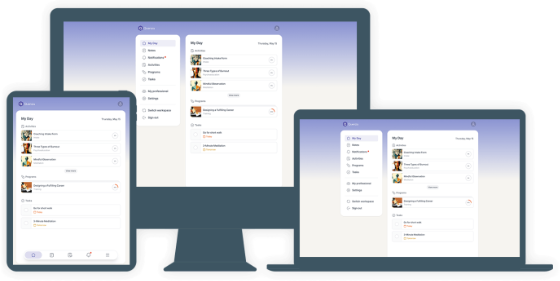
Start Your Free 30-Day Trial
Support your clients between sessions, where real change happens. Try Quenza free for 30 days and add up to 5 clients at no cost.