
Therapy activities for teens are structured therapeutic interventions designed to help adolescents process emotions, develop coping skills, and build resilience during a critical developmental period. From art-based exercises and group activities to digital tools and creative interventions, these evidence-informed approaches give practitioners flexible ways to engage young clients in meaningful therapeutic work.
Key Takeaways
- Effective therapy activities for teens should be developmentally appropriate, culturally sensitive, and matched to the adolescent’s presenting concerns and therapeutic goals.
- Group therapy activities help teens build social skills and reduce isolation by normalizing shared experiences in a safe therapeutic environment.
- Art and music-based interventions offer nonverbal pathways for teens who struggle to articulate emotions through traditional talk therapy.
- Digital therapeutic tools and telehealth platforms expand access and engagement for tech-native adolescents who may resist in-person sessions.
- Building a strong therapeutic alliance is the single most important predictor of positive outcomes when working with adolescent clients.
How to Choose Therapy Activities for Teens
If you’re not specifically trained to work with teens, don’t panic. Most therapy activities for children or adults can be adjusted for teens by following a few guiding principles.
As a general rule, therapeutic activities for teens should be:
Age appropriate: There’s a lot of variance in themes and techniques that are suitable across the adolescent age range. For example, activities around relationships and sexuality for 13-year-olds would be quite different from those for 17-year-olds.
Relevant: Individual or group therapy activities for teens should be relevant to the issues impacting them. Research shows things like peer pressure, academic stress, bullying, social media, drug and alcohol use, and sexual activity are top concerns of adolescents.
Interactive: Utilize interactive digital tools in therapy where appropriate. Not only will this keep teens more engaged, but digital therapy tools are also proven to have the capacity to enhance the effectiveness of in-person coaching and counseling interventions.
Values-based: Therapy activities are a great way to help teens discover and strengthen their values. Teens who feel grounded in their personal values are better equipped to navigate challenges like peer pressure, drug and alcohol abuse, and unwanted sexual advances.
Developmentally focused: Whereas therapy for adults often involves untangling entrenched patterns of behavior, teens are only just beginning to form their habits. When working with teens, try to focus less on “fixing” problems and more on developing positive habits.
Therapy Activity Types for Teens
| Activity Type | Best For | Setting |
|---|---|---|
| Art Therapy | Nonverbal emotional expression | Individual or group |
| Music Interventions | Mood regulation, self-expression | Individual or group |
| CBT Worksheets | Cognitive restructuring, anxiety | Individual |
| Group Discussion | Social skills, peer support | Group |
| Mindfulness Exercises | Stress reduction, self-awareness | Individual or group |
| Digital/App-Based | Engagement, homework compliance | Telehealth or in-person |
3 Fun Ideas for Adolescents and Youth
It’s important to make therapy activities for teens fun and lighthearted. This shows them the therapy process doesn’t always have to be focused on negatives and can include learning new skills and building up strengths.
These three fun therapy activities for youth are suitable for younger teens up to young adults.
Feelings in the Body
Emotions are felt in the body as well as the mind. Supporting teens to recognize the bodily symptoms of challenging emotions can help them become more aware of and able to regulate their feelings.
Start by introducing the concept of feelings in the body, then ask the teen to identify and draw where they feel anger, sadness, worry, and happiness in the body on this worksheet.
Your Standards for “Being Good Enough”
Cultivating self-compassion is increasingly being recognized as an effective way to promote good mental health and wellbeing in adolescents.
After introducing the concept of self-compassion, try guiding teens through completing the Your Standards for “Being Good Enough” worksheet shown below. A customizable, pre-made template of this worksheet is available in Quenza’s Expansion library, which is included in your free Quenza trial.
This activity asks your clients to list three standards below and describe the following for each:
- How they feel when they are not living up to this standard (e.g., angry or shameful)
- The sacrifices they make to be able to live up to this standard (e.g., neglecting their personal needs or pushing themselves too hard at school.)

Your Standards for “Being Good Enough” is a self-compassion worksheet that can be used to make teens aware of their standards to evaluate their worth and the negative consequences of trying to live up to these standards.
Red and Green Activities
Flow states – the experience of being completely absorbed and immersed in a task – are associated with good psychological health. Considering their stage in life, identifying leisure activities that feel good is a great way to help teens experience more flow states.
On the Quenza app, the Red and Green Activities Expansion shown below can be used as a fun therapy activity for youth.

When you assign this Pathway to a client using Quenza, they’ll receive a daily reflection exercise to their client app.
Each exercise starts with an overview of what “Green” (nurturing) and “Red” (depleting) activities are and how they make us feel, as shown below:

Best Practice: Building Therapeutic Alliance with Teens
Before introducing structured activities, invest time in rapport building. Adolescents are more likely to engage authentically when they feel genuinely heard and respected. Allow teens to have input in selecting activities, validate their autonomy, and avoid pressuring disclosure before trust is established. Research consistently shows that the quality of the therapeutic relationship predicts outcomes more strongly than any specific intervention technique.
Therapeutic Group Activities
Group therapy activities for teens are a great way to get adolescents to learn from each other by sharing their experiences. Try these exercises for peer pressure and dealing with negative thoughts.
Recommended: If you’re looking for more group therapy ideas, you’ll find them here: Online Therapy in Groups: Platform & Ideas for Your Session.
Peer Pressure Role Plays
Social relationships are highly influential on decision-making for teens, leading many adolescents to experience “peer pressure.”
Group-based role plays are ideally suited to help teens develop the skills needed to manage peer pressure. You might like to choose a topic, such as substance use, risky/illegal behavior, skipping school, or bullying, or you can let group members choose.
Set the role plays up to allow teens to practice responding to negative peer pressure first. Then, ask group members to demonstrate how they can exert positive peer pressure on their friends.
Building an ANT Farm
Adolescence is a great time to start teaching young people how to recognize and respond to unhelpful thinking styles (also known as cognitive distortions). Renowned psychiatrist Dr. Daniel Amen has an approach to working with cognitive distortions using CBT principles called “Killing ANTs” (ANT stands for Automatic Negative Thoughts).
Before doing this therapy group activity for teens, read the article, Do You Have an ANT Infestation in Your Head? You might ask older teens to read the article independently or summarize it for younger teens. It’s also useful to have the nine types of ANTs listed on a worksheet or displayed somewhere that everyone can see.
Ask everyone in the group to draw an outline of an ant (the insect) on a piece of paper, with an ANT (automatic negative thought) written inside it. Then, get the teens to place their pieces of paper in a pile to start building their ANT farm. Set a timer and get group members to write as many as they can in 15 minutes or so.
Once you’ve got your ANT farm, ask each student to choose a piece of paper at random, read it out, and answer two questions:
- Is this thought true?
- How might I feel if I thought this way?
Changing Negative Thoughts
Many negative thoughts we experience are due to faulty thinking rather than based on fact. These negative, inaccurate self-perceptions can create a downward spiral of negative thinking if not properly managed.
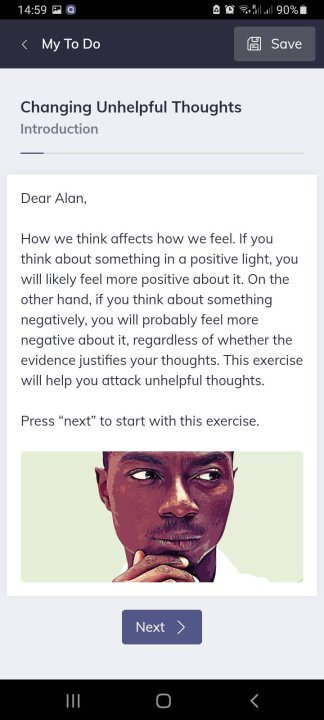
Quenza’s Changing Negative Thoughts Expansion, shown below, can be a useful CBT worksheet to help clients identify and reverse unhelpful thinking patterns by unpacking them.
This therapy activity for teens with depression takes the following the reader through several steps, including the following questions:
- On a scale of 1 to 10, how strongly do you believe this thought to be true?
- What evidence supports this thought?
- What evidence do you have against this thought?
- What would you tell a friend (to help them) who would have the same thought?
- Think of your calmest, most rational, and supportive friend or family member. How would he/she
- react to the causal thought? What would he/she say?
- What good things would you gain if you gave up on the thought? How would life be different if you didn’t believe the thought?
Here, we’ve covered many more helpful tools in our full guide to treating anxiety online.
Individual vs. Group Therapy Activities
| Factor | Individual | Group |
|---|---|---|
| Focus | Personal goals and processing | Social skills and peer learning |
| Privacy | High – one-on-one setting | Shared – confidentiality agreements |
| Engagement | Tailored to individual interests | Energized by peer interaction |
| Best For | Trauma, severe anxiety, depression | Social anxiety, self-esteem, grief |
2 Best Art & Music Interventions
Music and art therapy activities for teens can be powerful interventions to equip adolescents with skills to stay psychologically healthy now and into adulthood. Here are our two favorite art and music therapy activities for teens.
Values Vision Board
Values are the guiding principles that influence a person’s attitudes, beliefs, behavior, and wellbeing. Values are primarily developed in adolescence and tend to stay reasonably consistent through adulthood. Therefore, helping teens develop positive personal values can be a powerful way to set them up for good psychological health in later years.
A Values Vision Board is a great art therapy activity you can use with teens to encourage the intentional development of personal values. A pre-made template of the activity is available in the Quenza Expansion library:

After giving a three-step guide to collecting words and images, then assembling the board, the exercise poses some reflection questions. A few examples include:
- How was it to create this board? What did you experience while making it?
- To what extent do you think you live in line with the values depicted on this vision board?
- What could you do to live more in line with the values depicted on your board?
Good Vibes Playlist
Self-regulation, “The act of managing thoughts and feelings to enable goal-directed actions,” plays a foundational role in wellbeing throughout adolescence and adulthood. Music therapy activities for teens can be a useful tool to help young people improve self-regulation.
Ask a young person to make a “good vibes” playlist for the next time they feel angry, sad, or stressed. Explain that this playlist can help them sit with and move through difficult emotions without acting in a way they might regret later.
Spread this activity over a couple of sessions, exploring how your client can use the playlist to deal with challenges and review their experiences with it.
We’ve also created a full guide to emotional intelligence training that you may find useful.
“Adolescents do not resist therapy – they resist feeling controlled. When we offer activities that honor their developmental need for autonomy and self-expression, engagement follows naturally.”
– Dr. Lisa Damour, Clinical Psychologist and Adolescent Development Expert

The Value-First Practitioner (Free Guide)
Discover how 10,000+ practitioners grow their practices through client transformation, not marketing.
Engaging Teens in Telehealth: 3 Tips
Most of the therapeutic activities for teens we’ve discussed in this article can be adapted to telehealth or used as online coaching tools. Here are some tips to get the most out of telehealth therapy activities for teens.
- Incorporate movement. Add some simple movement at set intervals throughout your sessions. Jumping jacks or standing for some simple stretching exercises are good options.
- Switch up the format. Punctuate your therapy sessions with video and audio content, along with breaks to complete activities and provide feedback
- Silence Notifications. Electronic notifications can be distracting for both client and therapist during sessions. Practice reminding everyone in the session to silence notifications at the outset of each appointment.
Caution: Developmental Considerations for Teen Activities
Activities designed for younger children can feel patronizing to adolescents, while adult-oriented approaches may lack the scaffolding teens need. Always consider the developmental stage, cognitive maturity, and cultural context of each client. Avoid one-size-fits-all approaches, and be prepared to adapt activities in real time based on the teen’s response, energy level, and emotional readiness.
Digital Tools for Therapeutic Engagement
Incorporating digital tools into therapy sessions can significantly enhance engagement, especially for tech-savvy teens. Mobile apps, online platforms, and virtual reality (VR) environments offer innovative ways to conduct therapy, making sessions more interactive and appealing. These tools can provide real-time feedback, track progress, and offer a variety of exercises tailored to individual needs, ensuring a personalized therapeutic experience.
Digital tools like meditation apps and mood tracking platforms can be integrated into therapy to promote mindfulness and emotional regulation. These applications allow teens to practice techniques learned during therapy sessions independently, fostering self-awareness and coping skills. The accessibility of these tools on smartphones ensures that teens can use them anytime, anywhere, enhancing the continuity of care.
Virtual reality (VR) therapy is another cutting-edge tool gaining popularity. VR environments can simulate various scenarios, helping teens face and manage their anxieties in a controlled setting. This immersive experience can be particularly beneficial for exposure therapy, as it allows therapists to guide teens through their fears safely and effectively, facilitating gradual desensitization.
Online therapy platforms offer flexibility and convenience, breaking geographical barriers and making therapy accessible to more teens. These platforms often provide a range of services, including video sessions, chat support, and resource libraries, ensuring comprehensive care. The anonymity and comfort of accessing therapy from home can encourage more teens to seek help and engage in therapeutic activities.
Incorporating Creative Arts in Therapy
Creative arts therapy leverages the expressive power of art, music, dance, and drama to help teens explore their emotions and experiences. This non-verbal approach can be particularly effective for teens who find it challenging to articulate their feelings through traditional talk therapy. Engaging in creative activities can foster self-expression, reduce stress, and enhance emotional resilience.
Art therapy encourages teens to express themselves through drawing, painting, or sculpting. This process can help uncover deep-seated emotions and provide a tangible outlet for feelings that are difficult to verbalize. Creating art can be a therapeutic journey, offering insights into personal challenges and promoting a sense of accomplishment and self-worth.
Music therapy involves using music to address emotional, cognitive, and social needs. Teens can participate by listening to music, playing instruments, or composing their songs. Music therapy can help regulate emotions, improve mood, and develop social skills. It can also be a powerful tool for memory recall and processing traumatic experiences.
Drama and dance therapy offer dynamic ways for teens to explore their emotions and build confidence. Through role-playing, teens can experiment with different perspectives and solutions to their problems. Dance therapy uses movement to help teens connect with their bodies and express feelings non-verbally. Both forms of therapy can enhance self-awareness, foster creativity, and improve interpersonal skills, making them valuable components of a comprehensive therapeutic approach.
How Do You Measure Progress in Teen Therapy?
Tracking therapeutic progress with adolescents requires approaches that go beyond self-report alone. Practitioners can use standardized outcome measures such as the Youth Outcome Questionnaire (Y-OQ), the Strengths and Difficulties Questionnaire (SDQ), or the Revised Children’s Anxiety and Depression Scale (RCADS) administered at regular intervals.
Combining formal measures with session-by-session observation notes, goal attainment scaling, and feedback from parents or caregivers provides a comprehensive picture. Digital platforms like Quenza allow practitioners to send assessments between sessions, track trends over time, and share progress summaries with families to support collaborative care.
What Role Does Family Involvement Play in Teen Therapy?
Family dynamics significantly influence adolescent mental health outcomes. Research shows that incorporating family psychoeducation, parent coaching, or family therapy sessions alongside individual teen work produces stronger and more lasting treatment effects. This is particularly true for externalizing behaviors, eating disorders, and substance use concerns.
Practitioners should consider when and how to involve family members, balancing the teen’s need for confidentiality with the therapeutic value of systemic intervention. Activities that include family members – such as collaborative goal-setting exercises or communication skills practice – can strengthen the support system the teen returns to outside the therapy room.
How Can Practitioners Adapt Activities for Neurodivergent Teens?
Neurodivergent adolescents – including those with ADHD, autism spectrum conditions, or learning differences – often require modifications to standard therapeutic activities. Sensory-friendly environments, visual schedules, shorter activity segments with movement breaks, and special interest integration can dramatically improve engagement.
Practitioners should collaborate with the teen to identify preferred communication styles and sensory needs. For example, some neurodivergent teens may engage more readily with structured digital activities than open-ended verbal processing. Flexibility in session format and a strengths-based approach that leverages the teen’s unique interests and abilities are essential for effective therapeutic work.
Professional Disclaimer: This article is for informational and educational purposes only and is not a substitute for professional training, clinical supervision, or individualized treatment planning. Therapeutic activities should be selected and adapted based on each adolescent’s unique needs, clinical presentation, and cultural context. Always follow your profession’s code of ethics and relevant regulatory requirements when working with minors.
Engage Teen Clients with Digital Activities
Build interactive therapeutic activities, send assessments between sessions, and track progress – all in one platform designed for practitioners. Start your free 30-day trial today.
Final Thoughts
When delivered in an age-appropriate and engaging way, fun therapy activities for teens can be a great way to help adolescents manage emotional challenges and improve long-term psychological health.
The activities covered in this article are suitable for in-person individual and group work with teens, but they can also be effectively delivered through digital methods like the Expansion Library in the Quenza app. This feature allows you to choose from several ready-made activities in the app, or you can custom-build your own.
To get started, sign up for a one-month full-access free trial of the Quenza app.
In addition to Quenza’s Activity Builder, you’ll also get access to our HIPAA-compliant Notes feature and a variety of tools to track progress toward therapy goals and keep clients and family members engaged between sessions.
Frequently Asked Questions
What are the most effective therapy activities for teens with anxiety?
Evidence-based activities for teen anxiety include CBT-based thought records and cognitive restructuring exercises, progressive muscle relaxation, mindfulness meditation, exposure hierarchies, and grounding techniques. Art-based activities such as worry jars or emotion collages can also help anxious teens externalize and process their fears in a less threatening way.
How do you engage a reluctant teen in therapy?
Building rapport through shared interests, offering choices about activities and session structure, using technology-based tools, and avoiding overly directive approaches are key strategies. Practitioners should prioritize the therapeutic relationship over specific techniques, validate the teen’s autonomy, and be transparent about the purpose and confidentiality of sessions.
Are group therapy activities effective for teens?
Yes, group therapy is well-supported by research for adolescents. Group activities help teens develop social skills, reduce feelings of isolation, and learn from peer experiences. Group formats are particularly effective for issues like social anxiety, grief, self-esteem, and substance use, where peer normalization and support are therapeutic factors.
What therapy activities work best for teens in telehealth sessions?
Digital-friendly activities include online journaling, virtual art therapy using drawing apps, guided meditation via shared screen, interactive worksheets delivered through platforms like Quenza, collaborative playlist creation for music therapy, and structured check-in tools. Activities that use the teen’s own device and digital comfort zone tend to achieve the highest engagement.
How often should therapy activities be changed for teen clients?
There is no fixed schedule, but practitioners should monitor engagement and adjust activities when a teen shows signs of boredom, resistance, or plateauing progress. Some teens benefit from routine and predictability, while others need variety. Regular check-ins about what is and is not working help practitioners calibrate activity selection to maintain therapeutic momentum.
Can parents participate in teen therapy activities?
Parent involvement can be beneficial when clinically appropriate. Family-based activities like communication exercises, collaborative goal-setting, or psychoeducation sessions help strengthen the support system around the teen. However, practitioners should always secure the teen’s consent and maintain appropriate boundaries around individual session content and confidentiality.
References
1. Weisz, J. R., & Kazdin, A. E. (2017). Evidence-Based Psychotherapies for Children and Adolescents (3rd ed.). Guilford Press. Publisher Link
2. Shirk, S. R., & Karver, M. (2003). Prediction of treatment outcome from relationship variables in child and adolescent therapy. Journal of Consulting and Clinical Psychology, 71(3), 452-464. https://doi.org/10.1037/0022-006X.71.3.452
3. Malchiodi, C. A. (2011). Handbook of Art Therapy (2nd ed.). Guilford Press. Publisher Link
4. Hoge, M. A., et al. (2015). Mental health and addiction workforce development. Journal of Behavioral Health Services & Research, 42(4), 370-377. https://doi.org/10.1007/s11414-013-9360-1
5. Bornstein, M. H., & Lamb, M. E. (2015). Developmental Science: An Advanced Textbook (7th ed.). Psychology Press. https://doi.org/10.4324/9781315676067
6. Kazdin, A. E. (2017). Addressing the treatment gap: A key challenge for extending evidence-based psychosocial interventions. Behaviour Research and Therapy, 88, 7-18. https://doi.org/10.1016/j.brat.2016.06.004
7. Shechtman, Z. (2007). Group Counseling and Psychotherapy with Children and Adolescents. Lawrence Erlbaum Associates. https://doi.org/10.4324/9780203936696
8. Stiles, W. B., et al. (2008). Effectiveness of cognitive-behavioural, person-centred, and psychodynamic therapies in UK primary-care routine practice. Psychological Medicine, 38(5), 677-688. https://doi.org/10.1017/S0033291707001511
9. Nelson, E. L., & Patton, S. (2016). Using videoconferencing to deliver individual therapy and pediatric psychology interventions with children and adolescents. Journal of Child and Adolescent Psychopharmacology, 26(3), 212-220. https://doi.org/10.1089/cap.2015.0210
10. Damour, L. (2016). Untangled: Guiding Teenage Girls Through the Seven Transitions of Adolescence. Ballantine Books. Publisher Link