
In the ever-evolving landscape of mental health care, therapy note audits have emerged as a crucial component in maintaining the highest standards of patient care and professional integrity. These audits serve as a vital quality assurance mechanism, ensuring that mental health professionals adhere to best practices in documentation and comply with regulatory requirements [1].
For many therapists, coaches, and mental health practitioners, the prospect of a therapy note audit can be daunting. However, understanding the process and implementing effective strategies can transform this challenge into an opportunity for professional growth and improved patient care. This comprehensive guide aims to demystify therapy note audits, providing you with the knowledge and tools necessary to navigate them successfully.
As we delve into the intricacies of therapy note audits, we’ll explore their purpose, types, and best practices for preparation. By the end of this guide, you’ll be equipped with the insights needed to approach audits with confidence, ensuring that your documentation not only meets regulatory standards but also enhances the quality of care you provide to your clients.
Understanding Therapy Note Audits
Therapy note audits are systematic reviews of clinical documentation conducted to assess the quality, accuracy, and compliance of therapy notes. These audits play a pivotal role in maintaining the integrity of mental health services and ensuring adherence to professional standards [2].
The primary objectives of therapy note audits include:
- Verifying the accuracy and completeness of client information
- Assessing the clarity and appropriateness of treatment goals
- Evaluating the effectiveness of interventions
- Ensuring compliance with ethical and legal guidelines
- Identifying areas for improvement in documentation practices
These audits are typically conducted by external entities such as insurance companies, state licensing boards, or peer review committees. By scrutinizing a sample of therapy notes, auditors can gain insights into the overall quality of care provided and the therapist’s adherence to professional standards.
For mental health professionals, understanding the purpose and scope of these audits is crucial. It allows them to approach documentation with a mindset geared towards quality and compliance, rather than viewing it as a mere administrative task. Moreover, recognizing the importance of therapy note audits can motivate practitioners to continuously improve their documentation skills, ultimately benefiting both their practice and their clients [3].
By embracing the audit process as an opportunity for growth and refinement, mental health professionals can enhance the overall quality of their services, ensure continuity of care, and protect themselves from potential legal and ethical concerns.
Common Types of Therapy Note Audits
In the realm of mental health care, several types of therapy note audits exist, each serving a specific purpose and conducted by different entities. Understanding these various audit types can help practitioners prepare more effectively and tailor their documentation practices accordingly [4].
1. Insurance Company Audits:
These audits are primarily focused on verifying the accuracy of billing and ensuring that the services provided align with the client’s insurance coverage. Insurance companies review therapy notes to confirm that:
- The documented services match the billed codes
- The treatment provided is medically necessary
- The level of care is appropriate for the client’s condition
2. State Licensing Board Audits:
Conducted by regulatory bodies overseeing mental health professionals, these audits aim to ensure compliance with state laws and ethical standards. They typically examine:
- Adherence to confidentiality and privacy regulations
- Proper informed consent procedures
- Appropriate documentation of treatment plans and progress
3. Peer Review Audits:
These audits involve evaluation by fellow professionals in the field. They focus on:
- Quality of care provided
- Appropriateness of interventions
- Adherence to best practices in the field
Each type of audit serves a unique purpose in maintaining the integrity and quality of mental health services. Insurance company audits primarily safeguard against fraud and ensure appropriate use of resources. State licensing board audits protect clients by enforcing professional standards. Peer review audits contribute to the continuous improvement of the profession as a whole [5].
By understanding these different audit types, mental health professionals can tailor their documentation practices to meet the specific requirements of each. This proactive approach not only ensures compliance but also enhances the overall quality of care provided to clients.
Key Elements of Successful Therapy Notes
Crafting effective therapy notes is an essential skill for mental health professionals. Whether facing an audit or simply striving for excellence in practice, understanding and implementing key elements of successful therapy notes is crucial. These elements not only satisfy regulatory requirements but also contribute to better patient care and professional development [6].
1. Accuracy and Completeness:
Accurate and complete documentation forms the foundation of successful therapy notes. This involves:
- Recording precise details of each session, including date, time, and duration
- Documenting the client’s presenting issues and current mental state
- Describing interventions used and the client’s response
- Noting any changes in the treatment plan or diagnosis
2. Clear and Objective Language:
Using clear, concise, and objective language ensures that therapy notes are easily understood by other professionals who may need to review them. This includes:
- Avoiding jargon or ambiguous terms
- Using specific, observable behaviors rather than subjective interpretations
- Clearly differentiating between client statements and therapist observations
3. Timeliness and Consistency:
Timely and consistent documentation is crucial for maintaining accurate records. Mental health professionals should:
- Complete notes as soon as possible after each session
- Maintain a consistent format across all client records
- Regularly update treatment plans and progress summaries
4. Relevance to Treatment Goals:
Successful therapy notes should always relate back to the client’s treatment goals. This involves:
- Documenting progress towards established goals
- Noting any new goals or modifications to existing ones
- Explaining the rationale behind changes in the treatment approach
5. Legal and Ethical Considerations:
Therapy notes must adhere to legal and ethical standards, including:
- Maintaining client confidentiality
- Documenting informed consent
- Recording any mandated reporting actions taken
By incorporating these key elements into their documentation practices, mental health professionals can create therapy notes that not only withstand scrutiny during audits but also enhance the quality of care provided to clients. Well-crafted notes serve as a valuable tool for tracking client progress, facilitating collaboration with other professionals, and supporting continuous improvement in therapeutic practices [7].
| Challenge | Impact | Solution |
|---|---|---|
| Time constraints | Rushed or incomplete notes | Implement efficient note-taking systems |
| Lack of standardization | Inconsistent documentation | Use standardized templates |
| Privacy concerns | Risk of confidentiality breaches | Implement robust security measures |
| Unclear language | Misinterpretation of notes | Use objective, precise language |
Preparing for a Therapy Note Audit
Preparation is key to successfully navigating a therapy note audit. By taking proactive steps, mental health professionals can ensure their documentation meets required standards and demonstrates the quality of care provided [8].
1. Organize and Maintain Therapy Notes:
- Implement a consistent filing system, whether physical or digital
- Regularly review and update client files
- Ensure all notes are easily accessible and well-organized
2. Ensure Compliance with Documentation Standards:
- Familiarize yourself with current industry standards and regulations
- Regularly review and update your documentation practices
- Consider using standardized templates or forms to ensure consistency
3. Review and Update Privacy Practices:
- Regularly assess and update your privacy policies
- Ensure all staff members are trained in current privacy regulations
- Implement secure storage solutions for both physical and digital records
4. Conduct Internal Audits:
- Perform regular self-audits or peer reviews of your documentation
- Identify and address any areas of weakness or non-compliance
- Use audit findings to improve your documentation practices continuously
By dedicating time and resources to preparation, mental health professionals can approach therapy note audits with confidence, knowing their documentation reflects their commitment to quality care and professional standards.

The Value-First Practitioner (Free Guide)
Discover how 10,000+ practitioners grow their practices through client transformation, not marketing.
Best Practices for Therapy Note Documentation
Implementing best practices in therapy note documentation not only prepares you for audits but also enhances the overall quality of patient care [9].
1. Use Standardized Formats:
- Develop or adopt a consistent template for all therapy notes
- Include sections for client information, session content, interventions, and progress
- Ensure all required elements are present in each note
2. Be Concise Yet Comprehensive:
- Strike a balance between brevity and thoroughness
- Focus on relevant information that supports treatment goals
- Avoid unnecessary details that don’t contribute to patient care
3. Document Objectively:
- Use factual, observable language
- Avoid subjective interpretations or personal opinions
- Clearly differentiate between client statements and therapist observations
4. Update Treatment Plans Regularly:
- Review and revise treatment goals as needed
- Document progress towards goals in each session
- Note any changes in the treatment approach or interventions used
5. Maintain Confidentiality:
- Use client initials or identification numbers instead of full names
- Store notes securely, whether in physical or digital form
- Follow HIPAA guidelines for protecting patient information
By adhering to these best practices, mental health professionals can create therapy notes that not only meet audit requirements but also serve as valuable tools for providing high-quality, consistent care.
Leveraging Technology in Therapy Note Audits
In today’s digital age, technology plays a crucial role in streamlining therapy note documentation and audit processes. Embracing technological solutions can significantly enhance efficiency, accuracy, and compliance in therapy note management [10].
1. Electronic Health Record (EHR) Systems:
- Implement a reliable EHR system designed for mental health practices
- Utilize built-in templates and prompts for comprehensive documentation
- Take advantage of automatic reminders for treatment plan updates and assessments
2. Secure Cloud Storage:
- Store therapy notes securely in the cloud for easy access and backup
- Ensure the chosen cloud service complies with HIPAA regulations
- Implement strong encryption and access controls
3. Audit Trail Features:
- Use systems that maintain detailed audit trails of all document access and modifications
- Regularly review audit logs to ensure appropriate access and usage
4. Data Analytics Tools:
- Leverage analytics to identify trends in documentation practices
- Use insights to improve note quality and consistency across the practice
By effectively integrating technology into therapy note management, mental health professionals can not only simplify the audit process but also enhance their overall practice efficiency and quality of care.
| Benefit | Description | Impact on Audits |
|---|---|---|
| Standardized templates | Pre-designed formats for consistent documentation | Ensures all required elements are included |
| Automated reminders | System alerts for updates and assessments | Improves timeliness and completeness of notes |
| Secure storage | HIPAA-compliant data storage solutions | Enhances data security and accessibility |
| Audit trail features | Tracks all access and modifications to records | Facilitates transparency and accountability |
Ongoing Training and Professional Development
Continuous learning and professional development are essential for maintaining high standards in therapy note documentation and successfully navigating audits [11].
1. Stay Updated on Regulations:
- Regularly review updates to state and federal regulations
- Attend workshops or webinars on documentation best practices
- Subscribe to professional journals and newsletters in your field
2. Participate in Continuing Education:
- Engage in courses specifically focused on clinical documentation
- Attend conferences that address audit preparation and compliance
- Seek out specialized training in areas relevant to your practice
3. Engage in Peer Consultations:
- Participate in peer review groups to share knowledge and experiences
- Seek feedback from colleagues on your documentation practices
- Collaborate with other professionals to develop best practices
4. Utilize Online Resources:
- Access online tutorials and guides on therapy note documentation
- Participate in webinars hosted by professional organizations
- Engage in online forums and discussion groups with peers
By prioritizing ongoing training and professional development, mental health professionals can stay ahead of evolving standards and continuously improve their documentation practices.
Conclusion
Mastering therapy note audits is an essential skill for mental health professionals in today’s healthcare landscape. By understanding the purpose and types of audits, implementing key elements of successful therapy notes, and adhering to best practices, practitioners can ensure their documentation not only meets regulatory requirements but also enhances patient care [12].
Remember that effective documentation is not just about compliance; it’s a powerful tool for improving treatment outcomes and professional growth. By leveraging technology, engaging in ongoing training, and maintaining a proactive approach to documentation, mental health professionals can transform the audit process from a stressful event into an opportunity for continuous improvement.
As the field of mental health care continues to evolve, so too will the standards and expectations for therapy note documentation. By staying informed, adaptable, and committed to excellence, practitioners can ensure they are always prepared for audits while providing the highest quality of care to their clients.
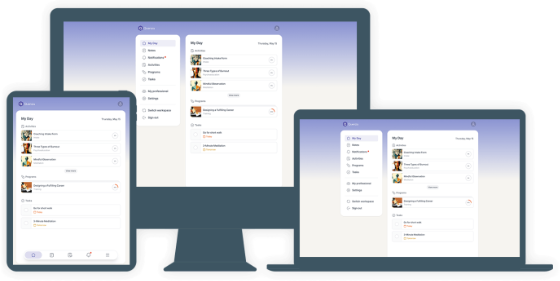
Start Your Free 30-Day Trial
Support your clients between sessions, where real change happens. Try Quenza free for 30 days and add up to 5 clients at no cost.
References
- ^ Adler, G., Pritchett, L. R., Kauth, M. R., & Mott, J. (2020). A pilot project to improve access to telepsychotherapy at the veterans health administration. Journal of Telemedicine and Telecare, 26(4), 245-252. https://doi.org/10.1177/1357633X18821063
- ^ Knaup, C., Koesters, M., Schoefer, D., Becker, T., & Puschner, B. (2009). Effect of feedback of treatment outcome in specialist mental healthcare: meta-analysis. The British Journal of Psychiatry, 195(1), 15-22. https://doi.org/10.1192/bjp.bp.108.053967
- ^ Tripathi, M., Delano, D., Lund, B., & Rudolph, L. (2009). Engaging patients for health information exchange. Health Affairs, 28(2), 435-443. https://doi.org/10.1377/hlthaff.28.2.435
- ^ Bjerkan, J., Hedlund, M., & Hellesø, R. (2015). Patients' contribution to the development of a web-based plan for integrated care - a participatory design study. Informatics for Health and Social Care, 40(2), 167-184. https://doi.org/10.3109/17538157.2014.907803
- ^ Kruse, C. S., Mileski, M., Vijaykumar, A. G., Viswanathan, S. V., Suskandla, U., & Chidambaram, Y. (2017). Impact of electronic health records on long-term care facilities: Systematic review. JMIR Medical Informatics, 5(3), e35. https://doi.org/10.2196/medinform.7958
- ^ Aung, E., & Whittaker, M. (2013). Preparing routine health information systems for immediate health responses to disasters. Health Policy and Planning, 28(5), 495-507. https://doi.org/10.1093/heapol/czs081
- ^ Greenhalgh, T., Wherton, J., Papoutsi, C., Lynch, J., Hughes, G., A'Court, C., Hinder, S., Fahy, N., Procter, R., & Shaw, S. (2017). Beyond adoption: A new framework for theorizing and evaluating nonadoption, abandonment, and challenges to the scale-up, spread, and sustainability of health and care technologies. Journal of Medical Internet Research, 19(11), e367. https://doi.org/10.2196/jmir.8775
- ^ Maust, D. T., Moniz, M. H., Zivin, K., Kales, H. C., & Davis, M. M. (2015). Attitudes about required depression screening in primary care: Potential unintended consequences. Annals of Family Medicine, 13(3), 275-278. https://doi.org/10.1370/afm.1764
- ^ Waller, G., & Turner, H. (2016). Therapist drift redux: Why well-meaning clinicians fail to deliver evidence-based therapy, and how to get back on track. Behaviour Research and Therapy, 77, 129-137. https://doi.org/10.1016/j.brat.2015.12.005
- ^ Bauer, A. M., Thielke, S. M., Katon, W., Unützer, J., & Areán, P. (2014). Aligning health information technologies with effective service delivery models to improve chronic disease care. Preventive Medicine, 66, 167-172. https://doi.org/10.1016/j.ypmed.2014.06.017
- ^ Watkins Jr, C. E. (2011). Does psychotherapy supervision contribute to patient outcomes? Considering thirty years of research. The Clinical Supervisor, 30(2), 235-256. https://doi.org/10.1080/07325223.2011.619417
- ^ Imel, Z. E., Caperton, D. D., Tanana, M., & Atkins, D. C. (2017). Technology-enhanced human interaction in psychotherapy. Journal of Counseling Psychology, 64(4), 385-393. https://doi.org/10.1037/cou0000213